
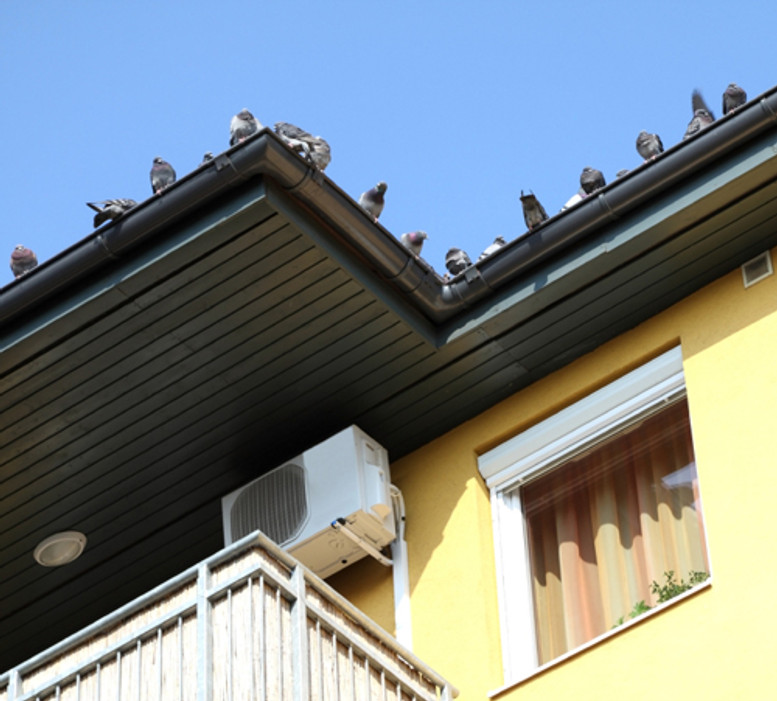
Common Diseases that Pest Birds Carry and Transmit to your Family
If you are one who puts bird baths and seeds out for the birds, beware. If you do not want the birds around and have not instituted any type of bird control strategy, again, beware. You are underlining the risks to your health and the welfare of your family. You are inviting disease and damage into your home environment.
Disease
According to the Merriam-Webster dictionary, the definition of disease is "an impairment of the normal state of the living animal or plant body or one of its parts that interrupts or modifies the performance of the vital functions: sickness, illness." Birds are the perfect carriers for disease. They create droppings wherever they land, and they often find a cozy spot and stick to that location. Most diseases are found in droppings where they are allowed to accumulate.
Histoplasma capsulatum (histoplasmosis) is caused by a fungus. Both humans and animals can be affected by this disease. The disease is transmitted by airborne fungus spores from soil polluted by pigeon, starling, and many other birds' droppings. It is found mostly in soil, but there are cases where the disease is found in droppings in attics. You can become infected when the spores are inhaled. The spores are carried by the air, which is likely to happen when a roost is disturbed. Most who are infected experience mild influenza-like symptoms. On occasion, however, histoplasmosis can cause high fevers, blood abnormalities, pneumonia, and at its worst, death. This is why bird control is needed before the birds establish an active and large roost.
Cryptococcus neoformans (cryptococcosis) is another fungal disease. Pigeon droppings seem to be the most important source of the disease. It is found in accumulated pigeon droppings around nesting and roosting sites, which can include attics, ledges, and areas near rooftop ventilation systems and air conditioning units. Similar to histoplasmosis, most cryptococcosis infections are mild, though persons with weakened immune systems are more susceptible. Cryptococcosis is also transmitted by inhaling the yeast-like cells of the organism. Two forms of the disease occur in humans: a lung infection that can spread to other parts of the body (especially the central nervous system, which can be fatal if untreated), and a rare skin (cutaneous) form that presents as ulcers with nodules or acne-like eruptions.
There are other diseases, such as psittacosis, that can range from mild to serious. Pigeons and other birds have also been implicated in the spread of the West Nile virus. Along with various diseases, birds and their roosting and nesting sites harbor mites, ticks, and other parasites, including bed bugs. When these diseases, parasites, and bugs are near ventilation systems and rooftops, there is a distinct chance they can enter your home.
Damage
Not only is the transmission of diseases an issue, but droppings also cause severe structural damage. Bird droppings are very acidic and will ruin paint, wood, roofing materials, and even metals. Millions of dollars are spent each year replacing and repairing the damage caused by pest bird feces. It saves time and money to act before a serious problem develops.
Solutions
There are many solutions to pest bird problems. If you are unsure what to do, bird control specialists can guide you along the path to a bird-free home. Bird infestations should be taken seriously. The bird control experts at Bird B Gone can help you assess the problem and come up with an economical solution. Call us today at 800-392-6915 or email us at nobirds@birdbgone.com.