
Please add the schema tags below
Do Birds Carry Disease? Bird Poop the Avian Super Spreader
Do Birds Carry Disease? Understanding the Risks of Avian Droppings
Property managers and bird control experts have been analyzing the transmission of avian diseases for decades. Nuisance bird infestations are not just an aesthetic issue; they represent a documented public health concern that requires proactive remediation.
Do Birds Carry Disease?
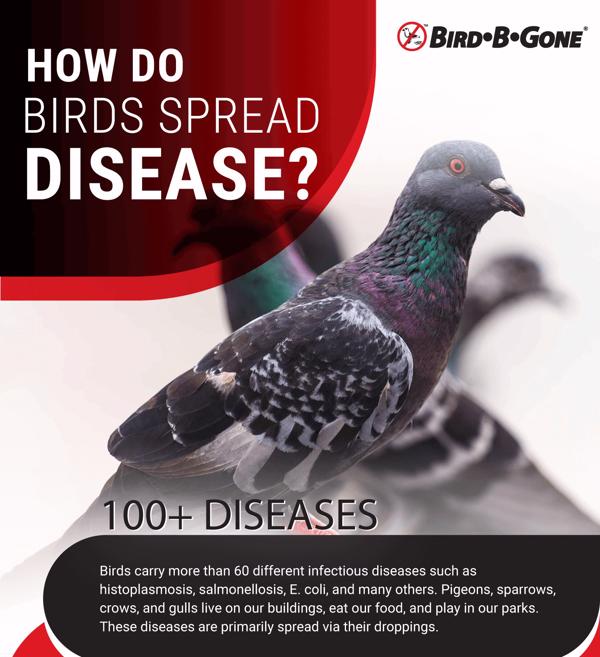
Yes, pest birds are known carriers of more than 60 transmissible diseases and over 40 distinct ectoparasites. Nuisance species host serious, communicable pathogens, including histoplasmosis, candidiasis, cryptococcosis, salmonellosis, and E. coli. Implementing a field-tested bird control program is essential to mitigating these health risks on commercial, industrial, and residential properties.
How Nuisance Birds Spread Pathogens
Avian pathogens generally fall into five distinct classifications: bacterial, viral, mycotic (fungal), rickettsial, and protozoal. Certain urbanized species—such as pigeons, sparrows, crows, and gulls—have adapted completely to human environments. They nest on rooflines, scavenge near loading docks, and loiter around outdoor dining areas, presenting a consistent exposure risk.
Birds rarely transmit these pathogens through direct contact or breath. Instead, the primary vector is their droppings. Bird droppings are highly contaminated, making them the most common transmission vehicle. Consider the volume: a flock of 100 pigeons can produce up to 4,800 pounds of material annually.
Pathogens typically pass from bird feces to humans via three primary exposure pathways:
1. Contamination of Food and Water Sources
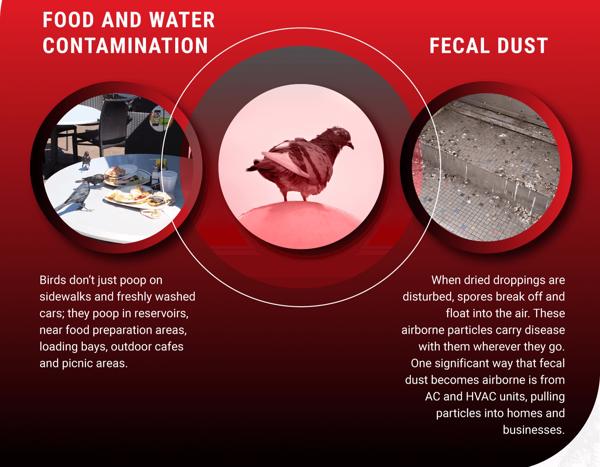
Because pest birds are naturally drawn to food and water, they frequently congregate near reservoirs, open-air agricultural storage, commercial loading bays, and outdoor dining facilities. Health inspectors will quickly penalize or shut down food processing facilities if any evidence of bird droppings is detected near production areas.
2. Inhalation of Aerosolized Fecal Dust
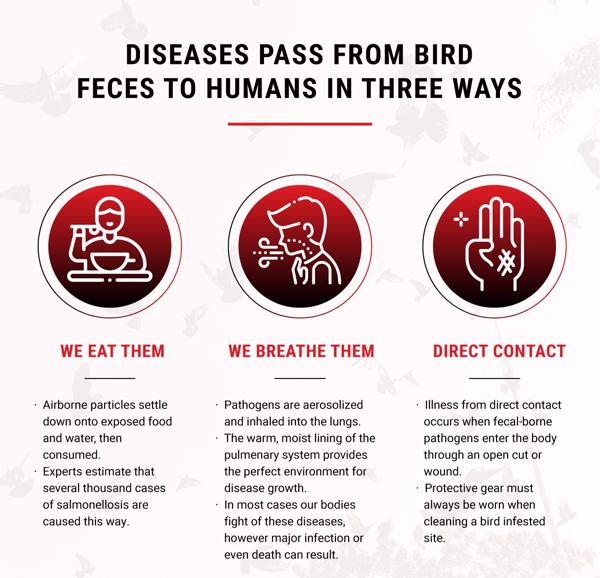
When accumulated droppings dry out and break apart, microscopic fungal and bacterial spores become airborne. This fecal dust can easily enter building HVAC systems. Air handling