
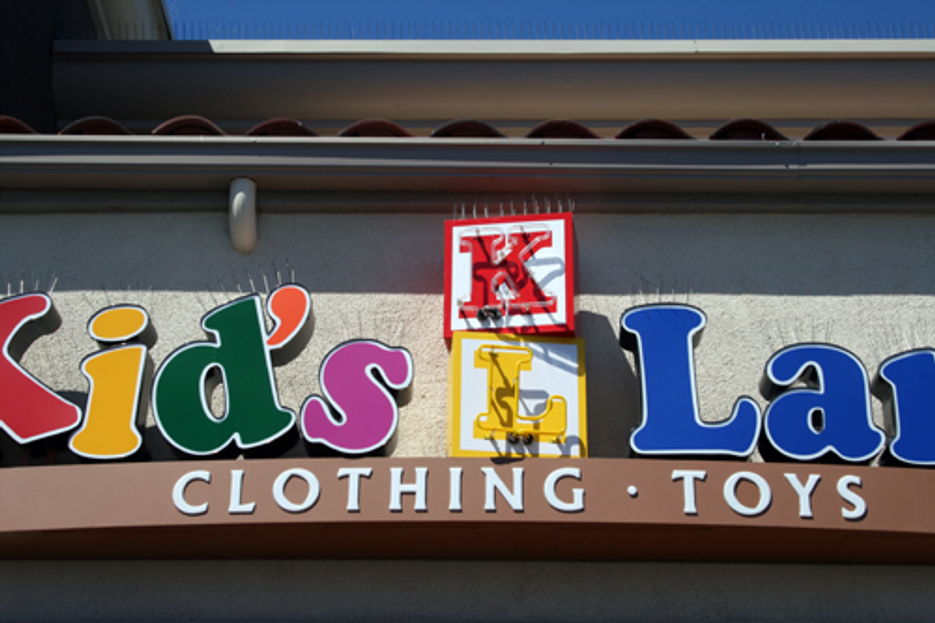
Shopping Centers Benefit Using Spiked Strips to Deter Pigeons
Shopping centers and strip malls are in every state and in every city. There are businesses that focus on company signage for these shopping areas. There are bird control products that keep signage bird-free. Company signs are notorious for attracting pest birds, and more often than not, the pest bird will be a pigeon.
Pigeons are mostly dependent upon humans to provide them with food, roosting, and nesting spots. This is why they gravitate towards buildings where there is a high volume of people and a place on the building to roost and nest. There will always be a great food source when people are around and throwing food down on the ground or in trash bins. The pigeon is most common around cities and parks, bridges, buildings, and other structures. They like high places above the ground. All the nooks and crannies in a tall building are like a five-star hotel to them.
Effective Deterrents for Rooftops and Signage
Bird spikes will deter pigeons and other larger pest birds from rooftops as well as signs. Spiked strips can also be placed on top of AC units, ducting, solar panels, security cameras, ventilators, fans, and all the other areas where birds may land.
Without the use of bird control, birds will not only make the structure unsightly with their feces, but the feces can also damage the structure over time. When pigeons deface a building, droppings also land on walkways, canopies, awnings, and every other surface. For a business, a messy first impression is bad for business. Also, the liability of slip-and-fall accidents is a serious concern that can harm the image of the business as well as employees and visitors.
Health Risks Associated with Pigeon Droppings
Other illnesses can come about due to the accumulation of bird droppings. There are over 60 transmitted diseases that can affect humans who come in contact with droppings that harbor these pathogens. Pigeon droppings can harbor histoplasmosis, cryptococcosis, and psittacosis. Both histoplasmosis and cryptococcosis are caused by fungi that grow in pigeon droppings. Like most diseases, individuals with compromised immune systems are most susceptible.
Implementing a Bird Control Strategy
There is a way to prevent all of these liabilities. A bird control strategy in place will stop birds from landing, roosting, and nesting, and in turn, stop the accumulation of their droppings. Installing bird spikes will alter bird behavior wherever they are installed. Bird spikes are a very economical way to get rid of birds, especially pigeons. The spikes come in an array of colors to match building aesthetics when choosing plastic bird spikes, including crystal clear, black, white, tan, brick red, gray, and brown. The spikes come in different widths: 3", 5", and 7". The spiked strips look intimidating, but they will not harm birds or installers. Bird spikes have been approved by several humane groups around the world, such as the U.S. Humane Society and Pigeon Control Advisory Service.
A similar bird control strategy to spiked strips is an electric shock track. This does not harm birds either; rather, the track is laid down in similar places as spikes, delivering a harmless electrical jolt when a bird tries to land.
Both options are permanent solutions to an ongoing problem that needs to be addressed. There are many different bird control options to choose from, and Bird B Gone offers free training and support to make your bird control solutions as successful as possible.