
Bird Problem Assessment - 9 Steps for Proper Bird Control
Bird Problem Assessment: 9 Critical Steps for Effective Control
A thorough site assessment is the foundation of any successful bird control project. To help you or your team evaluate properties efficiently, our bird control experts have put together an easy-to-follow guide outlining the 9 key steps you cannot afford to skip.
To assist you in the field, we have created a comprehensive, downloadable site evaluation form designed for both commercial and residential properties. This tool guides you through every variable needed to build an accurate, professional quote.
FREE DOWNLOAD: Bird Control Site Evaluation Form (PDF)
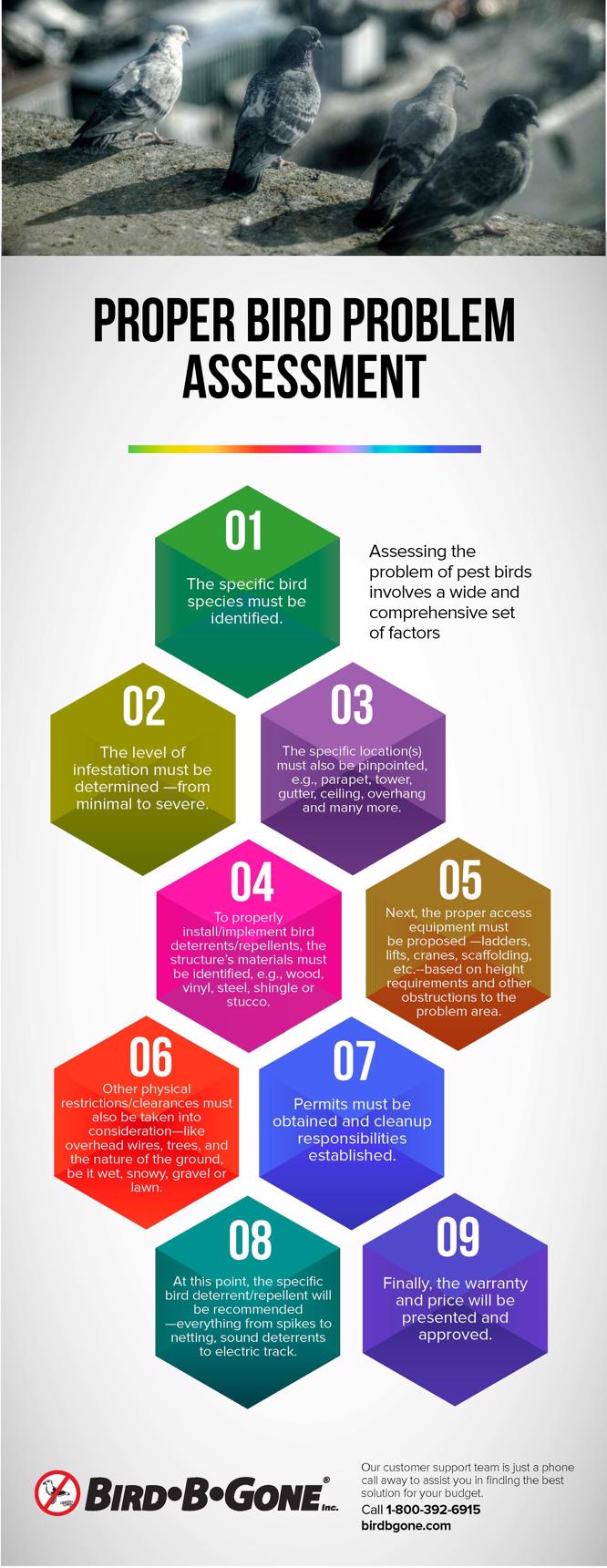
9 Key Points When Assessing a Bird Problem
- Identify the Bird Species
- Determining the exact bird species is the most critical first step. It establishes what legal regulations apply (protected vs. non-protected species) and dictates the physical size constraints required for your deterrents.
- Evaluate the Bird Pressure and Flock Size
- Assess the population size and their level of commitment to the structure. High bird pressure (such as an established nesting flock) requires heavy-duty physical exclusion, while low bird pressure (occasional daytime perching) can often be managed with sensory or visual deterrents.
- Pinpoint All Infestation Locations
- Map out every area on the property where birds are active. Nuisance birds will frequently move to alternative ledges or rooflines once a primary spot is blocked. Finding the right bird control product by area ensures you cover all potential backup roosts.
- Identify the Structural Substrate Materials
- Note whether you are mounting to wood, concrete, steel, sheet metal, masonry, or stucco. Knowing the structural material beforehand determines the correct installation hardware, types of anchors, or specialized adhesives required for a permanent bond.
- Determine Necessary Access Equipment
- Evaluate the heights and physical surroundings to identify the safest, most efficient access tools. Pinpoint whether the job requires extension ladders, boom lifts, scissor lifts, scaffolding, or cranes to keep your crew safe and compliant.
- Recognize Environmental and Site Restrictions
- Identify physical hurdles that could delay or endanger the project. Look for overhead power lines, tight building clearances, overhanging tree canopies, or unlevel ground that could restrict heavy equipment usage.
- Obtain Required Work Permits
- Determine if the property requires special clearances before work begins. This includes public right-of-way sidewalk closures for lifts, historical building preservation permits, or strict local municipal environmental codes.
- Select the Correct Bird Deterrents
- Use the data gathered in the first seven steps to select your primary and secondary control methods (e.g., structural netting, low-profile track, or spikes). Utilizing a structured evaluation form allows you to clearly explain to your client why specific methods were chosen and why cheaper alternatives would fail under the current bird pressure.
- Present a Professional, Data-Driven Proposal
- Deliver a transparent project estimate. Your final proposal should break down material costs, specialized tool or lift rentals, travel expenses, labor hours, and product warranties, leaving no room for unexpected surprises.
Partner with the Bird-B-Gone Experts
You don't have to figure it out alone. Our commercial technical support team is always available to help you review site photos, read architectural blueprints, or select the ideal parts list for complex installations. Contact our experts today at 1-800-392-6915 to discuss your next project.