
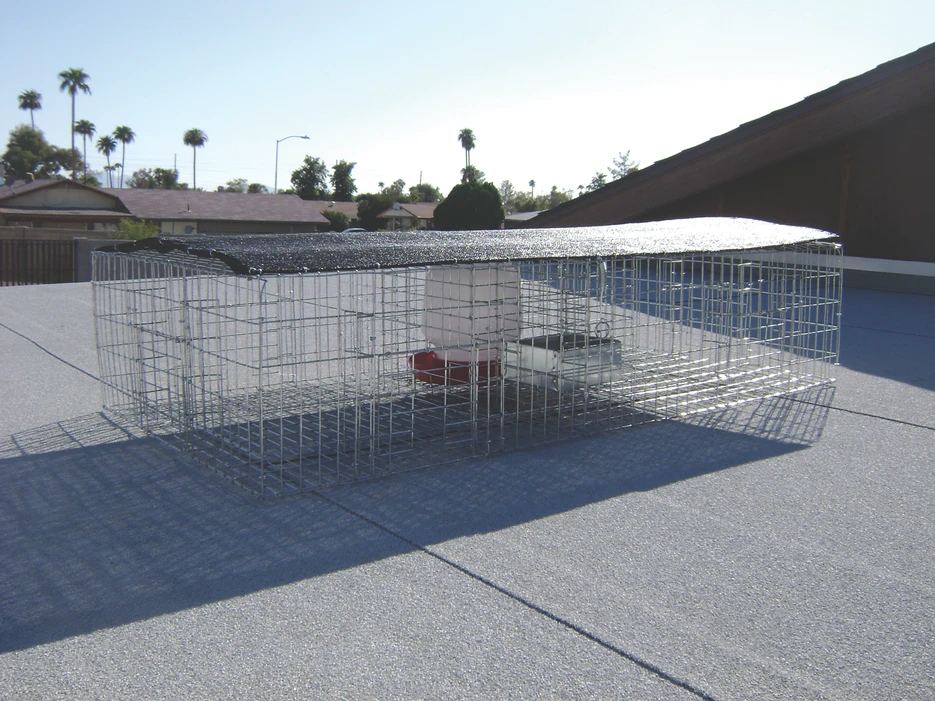
How to Choose the Right Commercial Pigeon Trap for Your Site
Managing pigeon populations on commercial, industrial, or residential properties requires selecting the right live-capture equipment for the job site. Factors such as flock density, roof slope, transport space in service vehicles, and deployment duration all dictate which trap design will yield the highest capture rates and operational efficiency.
This guide breaks down the core features of professional pigeon traps to help facility managers and pest control operators select the ideal equipment for their specific site requirements. If you are exploring the foundational steps of evaluating equipment options, you may also want to review our guide on Choosing the Right Bird Trap in 6 Easy Steps.
Key Decision Factors Before Selecting a Trap
Before placing an order or deploying equipment, evaluate the physical characteristics of your trapping site and the scope of the bird problem:
- Flock Size and Capacity Needs: Estimate the number of resident pigeons. Small spot-trapping on pitched residential rooftop requires a different footprint than high-volume commercial rooftop operations.
- Surface Pitch and Terrain: Standard flat-bottom traps require level surfaces to keep internal balance and entry doors functioning properly. Sloped or pitched roofs require specialized leveling mechanisms.
- Transport and Storage Footprint: Service vans and route trucks have limited storage capacity. Collapsible traps fold flat for easy transit, while rigid traps offer permanent structural rigidity.
- Deployment Duration: Multi-day deployments require integrated shade, water, and feed accessories to maintain bird safety and calm captured pigeons until extraction to stay compliant with local regulatory compliance.
Matching the Trap to Your Site Requirements
Portable and Collapsible Traps for Service Van Efficiency
For pest management and wildlife professionals who move between multiple job sites or have limited vehicle storage, collapsible traps offer high-capacity capture without taking up valuable truck bed space.
- For Medium-Volume Portable Deployments: The 35" x 16" x 8" Collapsible Pigeon Trap with Shade holds 12+ pigeons and folds completely flat for effortless transport. It features four one-way entry doors and an integrated shade screen to protect birds from direct heat during active trapping.
- For High-Volume Walk-Through Operations: The 40" x 22" x 12" Collapsible Pigeon Trap humanely contains 18+ pigeons. Its walk-through configuration encourages natural bird movement into the cage, while its pop-up frame sets up in seconds without tools.
Specialized Traps for Pitched and Slanted Rooftops
Rooftops are primary roosting areas for pigeons, but angled pitches create installation challenges for standard traps.
- For Sloped Roofs and Angled Surfaces: The Large Pigeon Trap for Slanted Surfaces (36" x 24" x 10") is engineered with built-in adjustable leveling legs. This allows the frame to remain completely horizontal on pitched roofs, ensuring the six one-way entry doors hang correctly and operate smoothly. It holds 20+ birds and includes a protective shade screen, water container, and food pan.
Rigid Traps for Multi-Day and Extended Deployments
When trapping operations run continuously for several days, traps equipped with dedicated food, water, and shade accessories are necessary to maintain bird welfare and to follow regulations based on your location.
- For Standard Commercial Deployments: The 35" x 16" x 8" Pigeon Trap with Shade, Food & Water holds up to 12+ birds. Constructed from heavy-duty wire mesh, it provides a turnkey solution for medium-sized flocks on flat roofs or ground level.
- For Large Commercial and Industrial Sites: The 46" x 24" x 10" Large Pigeon Trap with Shade, Food & Water is a high-capacity system that humanely holds 30+ pigeons. It features six one-way entry doors, a divided internal compartment layout, a 1-gallon water container, a feeder pan, and a hinged shade screen.
Low-Profile Traps for Tight Spaces and Ledges
In urban environments, pigeons often roost on narrow architectural ledges, window sills, or parapet walls where full-sized commercial traps cannot fit.
- For Spot Trapping on Ledges: The Pigeon Motel (24" x 12" x 8") features a compact 5 lb frame designed specifically for tight structural spaces. Holding up to 6+ pigeons, its low-profile footprint allows for discreet placement on narrow perches.
Pigeon Trap Selection Matrix
| Site Condition / Operational Need | Key Feature Needed | Recommended Pigeon Trap |
|---|---|---|
| Limited Truck Space / Multi-Site Operations | Fold-Flat Collapsible Frame | 35" Collapsible Trap or 40" Collapsible Trap |
| Pitched or Angled Rooftops | Adjustable Leveling Legs | Large Slanted Surface Trap |
| High-Volume Commercial Flocks (30+ Birds) | Divided Frame & High Door Count | 46" Large Pigeon Trap |
| Multi-Day Continuous Deployments | Integrated Food, Water & Shade | 35" Standard Trap or 46" Large Trap |
| Narrow Ledges, Parapets, or Window Sills | Compact Footprint |
Best Practices for Maximizing Catch Rates
Regardless of which trap model you select, always follow your local, municipal, state, and/or federal guidelines. For a deeper look into how live traps safely manage nuisance populations, read more about how Catch and Release Bird Traps Remove Pest Birds Humanely.
- Pre-Bait the Area: Prop trap doors open for 2 to 3 days prior to active trapping. Place cracked corn or grain around and inside the trap to acclimate pigeons to entering the structure freely.
- Provide Adequate Shade and Water: Always utilize shade screens and full water containers during warmer months to minimize stress on captured birds.
- Inspect Traps Regularly: Check traps daily to remove captured birds efficiently and replenish bait and water supplies.
- Implement Post-Trapping Exclusion: Once the resident flock is removed, install long-term deterrents such as stainless steel bird spikes or heavy-duty bird netting to prevent new flocks from re-infesting the structure.