
Please add the schema tags below
Get Rid of Birds Fast: 3 Most Important Things to Know
Get Rid of Birds Fast: 3 Most Important Things to Know
The list of bird problems could go on and on, which is why so many property owners search the internet for “how to get rid of birds” every single day.
Whether you are at the beginning of your bird control journey or you have tried a few DIY methods with little success, the good news is that bird control isn’t rocket science. There are field-tested methods that can drastically improve your results.
To solve any bird control problem efficiently, you must first identify these three crucial factors:
- What Kind of Bird? Identifying the specific bird species allows you to determine what legal regulations and physical limitations apply to your solution.
- Where Are the Birds? The physical location of the bird problem directly reveals their activity level—such as perching, loafing, or nesting—which dictates the type of product required.
- How Many Birds Are There? The larger the population, the higher the "bird pressure." High-pressure situations require more aggressive exclusion strategies, making early action essential.
Letting these three questions go unanswered can lead to wasted time and effort. Review the detailed breakdowns below to see how our bird control specialists evaluate a property.
1. What Kind of Bird?
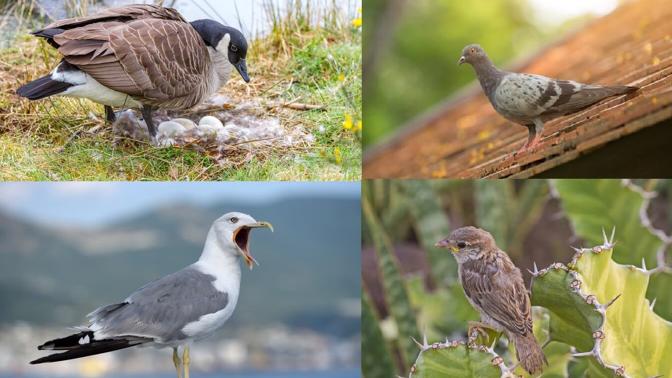
Is the Species Protected?
Most bird species benefit from federal protections that limit the bird control methods you can legally deploy. These regulations are designed to prevent protected birds from being put in harm’s way. Never touch, disturb, or remove a bird or its active nest unless you are 100% certain of the species you are dealing with.
Pigeons, sparrows, and starlings are three of the most common sources of property infestations and are generally the least protected birds, making management straightforward.
Size of the Bird Matters
The physical size of the pest bird dictates the physical limitations of your deterrents:
- Bird Spikes: Designed explicitly for pigeon-sized birds or larger. They are not effective for small birds.
- Bird Netting: Highly effective for all sizes, provided you choose the appropriate mesh size for the targeting species.
- Scare Tactics: Flashy visual deterrents and audible distress calls are popular but are primarily effective for small birds that frighten easily.
2. Where Are the Birds?

Where on your house or commercial property are the birds spending time? Pinpointing the exact site tells us their motivation level:
- Open, Exposed Ledges (Low/Medium Motivation): Rooflines, windowsills, and flat ledges are great places for birds to scout for food or watch for predators during the day. Because these areas offer no shelter, birds are rarely nesting here.
- Covered, Shaded, or Protected Areas (High Motivation): Spaces under solar panels, covered porches, carports, and deep eaves provide shelter from harsh weather and predators. Birds in these spots are often nesting, meaning they are highly motivated to stay and will fight to keep their spot.
The Crucial Step: Sanitation and Cleanup
Regardless of the species or location, every successful bird control strategy must begin with a thorough cleanup of existing droppings and debris. Birds are highly attracted to the scent of their own messes and pheromones; leaving the mess behind acts as an open invitation for them to return.
Thoroughly cleaning and disinfecting the area eliminates these attraction scents and lowers their motivation to reclaim the space. Because bird droppings can carry hazardous pathogens, always use proper personal protective equipment (PPE) or consult professionals for heavy cleanups.
3. How Many Birds Are There?
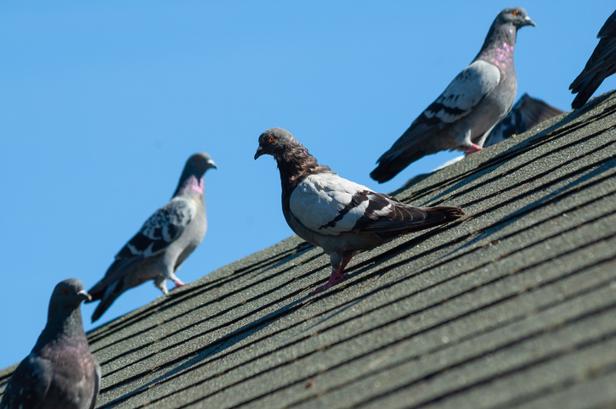
Bird control professionals use the terms "Infestation Level" and "Bird Pressure" to define the combination of flock size and their structural attachment to the space:
- Low Bird Pressure: An occasional bird perching on a fence or balcony railing. Deterrence is simple and straightforward.
- Medium Bird Pressure: A handful of pigeons or gulls gathering on a rooftop ledge with regularity. This requires thorough cleanup and a combination of visual or physical deterrents.
- Heavy Bird Pressure: A large, established flock nesting under solar panels or inside an open warehouse. High-pressure situations require heavy-duty, permanent physical exclusion barriers like netting or mesh.
Useful Resources for Property Owners
- Resource: Shop Bird Control by Species
- Resource: Shop Bird Control by Problem Area
- Resource: Ask a Bird Control Expert for Help
- Related Article: Nesting Birds on Your Home? How to Get Rid of Them
Bring in the Bird Experts
Once you know what kind of birds you have, where they are hanging out, and how many there are, you have everything you need to build an effective battle plan. Bird-B-Gone is the world's leading manufacturer of humane bird control solutions. Whether you are dealing with a single woodpecker damaging your siding or hundreds of pigeons overtaking a commercial roof, we have the field-tested tools to solve the problem.
Contact the Bird-B-Gone team today at 1-800-392-6915 or email nobirds@birdbgone.com to find the right solution for your property.