
Pigeon Spikes the Ultimate in Bird Deterrents
A pest that often needs deterring is the feral pigeon. Conflict usually arises when the pigeon intersects with the public. Pigeons are known to transmit the bird flu and other transmittable diseases. A major concern also is the damage they create on the property. Most cities and urban areas supply a year round food source for these pest birds and most buildings have an area that is a comfortable habitat for them to breed. The pigeon will lay eggs up to six times per year. The number of pigeons in an area can multiply rather quickly if left unchecked and left to do what they naturally do.
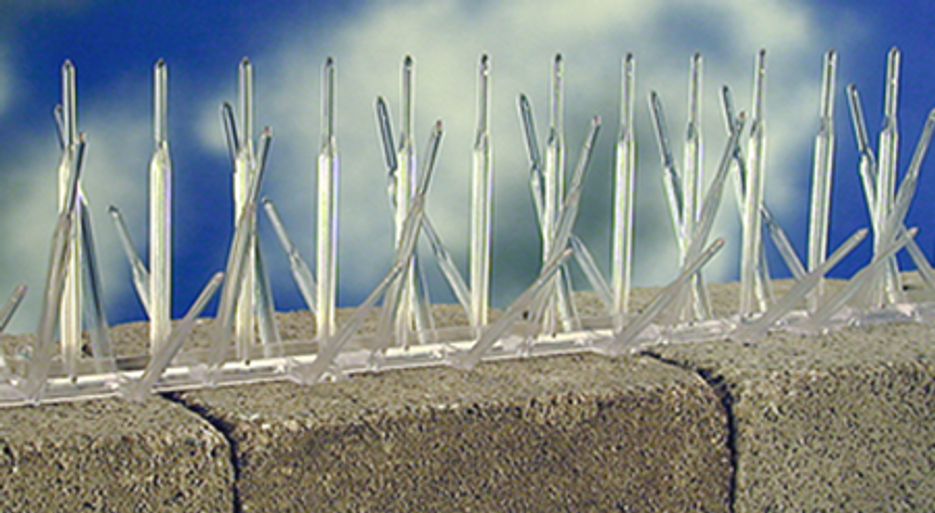
All pest birds, especially the pigeon, are remarkably good at spotting access points such as gutters, air conditioners, external ledges and loose tiles. Pigeons prefer to roost on level surfaces, and this is why they are drawn to buildings. Modifying the structure is the most effective way to control where they roost. It makes it difficult for the pigeon to roost comfortably on the building surface. One way to keep pest pigeons from landing and roosting near your home or building is to install pigeon spikes. They come in plastic and stainless steel offering a virtually invisible and humane way to keep the nuisance pigeon from landing on your roof and ledges, therefore eliminating their droppings from piling up. The pigeon spikes adapt well on any curved or flat surface where the pigeons are known to roost. The spikes can also be applied to patio coverings and on the tops of light poles and within the business signs on the building. Pigeon spikes can either be put on using adhesive or attached with screws. Plastic bird spikes are very versatile. They come in a variety of colors to match the structure that they are being applied to. There are 3 different width sizes, from 3” to 7.” The 3” to 7” strips of spikes act as a prickling barrier to exclude birds from the surface without harm. The spikes are a definitive bird deterrent for pigeons.
Applying the pigeon spikes before the pest bird can cause damage is optimal. Once there is feces build up, the cost of the damage and clean up would be drastically more than installing the simple bird deterrent. Pigeon droppings damage and deteriorate buildings. Large amounts of feces produce an unpleasant odor. It is particularly important for health purposes to not allow the pigeon droppings to accumulate. Pigeons carry and spread diseases to humans as well as livestock through their feces. They can transmit pigeon ornithosis, encephalitis, cryptococcosis, salmonella food poisoning, and several other diseases. Also, under the right conditions, pigeon feces can harbor air-borne spores of Histoplasmosis, a systemic fungus disease that can infect humans. This type of disease is spread when the droppings are disturbed and a person breathes in the dust like debris. This disease can be especially serious and more easily obtained by those with compromised immune systems.
The spikes are easily installed and the building maintenance personnel can easily secure the spikes into place. The spike strips have blunted ends, so the installer is in no danger of being injured. The pigeon is also in no danger should it get close to the spikes. Professional installers are also available to help guide you to the best way to implement this type of bird control product.